
About The Automotive Safety Council
The Automotive Safety Council is a nonpartisan trade association representing leading automotive safety suppliers. ASC brings together industry leaders to support collaboration, shared understanding, and informed discussion around automotive safety.
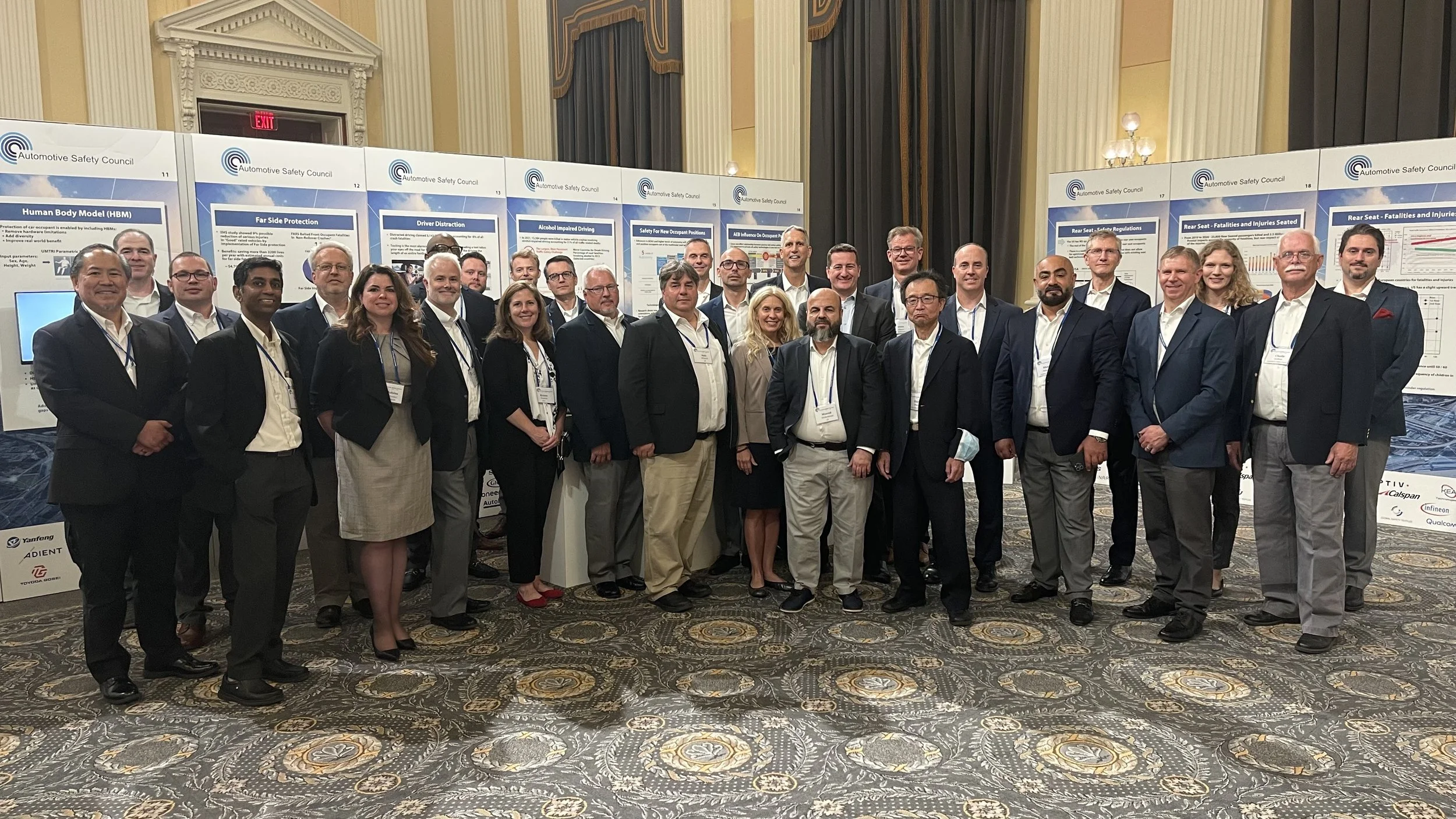
Who We Are
-
The mission of the Automotive Safety Council is to improve the safety of people through out the world through the development, production and implementation of the latest automotive safety equipment by preventing accidents, protecting occupants and pedestrians when in a collision and to notify emergency responders after the collision when necessary. The mission utilizes voluntary, regulatory and legislative directed use of these life saving products in order to make it available to the most people in the lowest cost manner to save the most people from injuries and fatalities.
-
From our first incarnation in 1962 as the American Seat Belt Council (ASBC), through our transformation to Automotive Occupant Restraints Council (AORC) in 1991, to our newest version as Automotive Safety Council in 2011, our organization has grown, transformed and responded to represent our members in the evolving automotive safety industry in a unique way. In the earliest days, the American Seat Belt Council’s Seal of Approval assured that the new life-saving devices installed for the first time in passenger vehicles met quality and engineering standards. At the same time the Council launched educational programs to inform motorists about the benefits and function of seat belts and began working for state legislation to require seat belt use nationally.
When the National Highway Traffic Safety Administration (NHTSA) was formed in 1966, the first standard for passenger seat belts, FMVSS 209, was based on the benchmark developed by the American Seat Belt Council in conjunction with the Society of Automotive Engineers. From this precedent to present day, the Council continues to work closely with the NHTSA in setting the standards for automotive safety. For fifty years, the Council has been the resource for regulatory agencies; partner with sister organizations in promoting vehicle safety; and agent for its members’ products and technologies.
Throughout our existence, the Council has been in the forefront of public safety education and promotion of the life-saving benefits of its members’ products.
Founded the Saved by the Belt Club in 1978, which enrolled more than 35,000 survivors nationwide over the next decade, including many celebrities, sports figures and public officials.
Developed “3 Seconds to Safety” in 1984; a reading program about seat belts aimed at grades three to six, which became a prototype for other such safety awareness programs.
A founding member of Traffic Safety Now, a government/industry alliance begun in 1984 to promote passage of mandatory seat belt laws in the U.S. as a cost-effective means of reducing traffic fatalities and injuries. The alliance ended its mission in 1992, having achieved passage of belt use laws in 43 states and the District of Columbia.
AORC hosted the first Airbag Technology Fair in Washington, DC in 1997 to combat misinformation about airbags and to educate legislators, regulators, the public and the media about inflatable restraints technology and to improve safety for children and small stature adults.
A charter member of the Air Bag Safety Campaign, begun in 1997 in response to airbag-related child passenger fatalities, the Council contributed $500,000 to the two-year outreach to reduce child passenger fatalities to 25% and increase national seat belt usage to 90%. The success of the campaign extended its programs for an additional eight years during which the Council and its members provided leadership, technical expertise and $2 million in total funding.
Held a national press conference in Washington, DC in 2002 to publicize the dangers of reuse of salvaged/recycled airbags. The Council widely disseminated its “Tip Sheet” to protect consumers from false airbags.
Staged a well-received Congressional Technology Fair in 2007 in Washington, DC with the theme “Integrating Active and Passive Safety for the Future”. The many exhibits introduced legislators and regulators to safety technologies developed by AORC member companies to meet federal safety mandates for new vehicles. Additional Technology Fairs were held in 2013, 2017 and 2023.
The Council has assumed a key leadership role in joint government/industry Working Groups to address emerging safety issues and craft regulatory precepts focusing on ejection in rollovers; electronic data recording; low risk deployment with child safety seats; airbag reuse/recycling; international transportation of inflatable restraints components and many other topics of value to our industry. We continue to maintain a reputation for integrity, veracity and expertise, which permits us to liaise with government regulators on technical issues of value to our members and of vital importance to the motoring public. The Council is recognized as a primary resource for technical and educational data by federal and state governments, emergency responders, national media and the general public. Our over sixty-five years in automotive passenger safety has made the Council the acknowledged industry leader.
Throughout the evolution of our organization our mission has remained constant: To save lives and reduce vehicle-related injuries globally through the use of lifesaving occupant protection systems and the latest crash avoidance technologies. Our international membership encompasses both the old-guard of the occupant restraints industry and firms engaged in the newest cutting-edge electronics, software, systems and virtual modeling.
-
ASC’s goal is to advance automotive safety by supporting collaboration, informed dialogue, and shared understanding across the industry and public safety community.
Nonpartisan and evidence-informed
ASC operates as a nonpartisan organization grounded in research and data.Industry-led, collaborative approach
ASC brings together industry leaders to collaborate on shared safety priorities.Focused on dialogue and shared understanding
ASC supports constructive dialogue to build understanding across stakeholders.Engaged at both national and international levels
ASC engages with partners and stakeholders at both national and international levels.
ASC OFFICERS
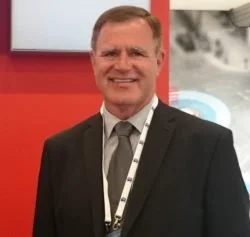
Douglas P. Cambell
Doug Campbell has served as President of the Automotive Safety Council since 2008, following more than two decades as TRW’s representative on the ASC Board of Directors and as Vice President of Engineering at TRW. In his role at ASC, he oversees the organization’s operations, represents member interests, and supports collaboration across industry, government, and public safety stakeholders.
Throughout his career, Doug has held senior leadership roles across the automotive safety sector, including overseeing global engineering operations for occupant safety systems such as airbags, seat belts, steering wheels, and advanced driver assistance technologies. His work has spanned large, multinational teams and complex product portfolios focused on improving vehicle safety worldwide.
Doug holds a Bachelor of Science in Mechanical Engineering from General Motors Institute (Kettering University) and a Master of Science in Engineering Design and Economic Evaluation from the University of Colorado and a Diploma from the American Graduate School of International Management. A licensed Professional Engineer, he has served on numerous industry and technical committees and has received multiple awards, including the NHTSA Special Award of Appreciation, recognizing his contributions to engineering innovation and automotive safety.
President & CEO
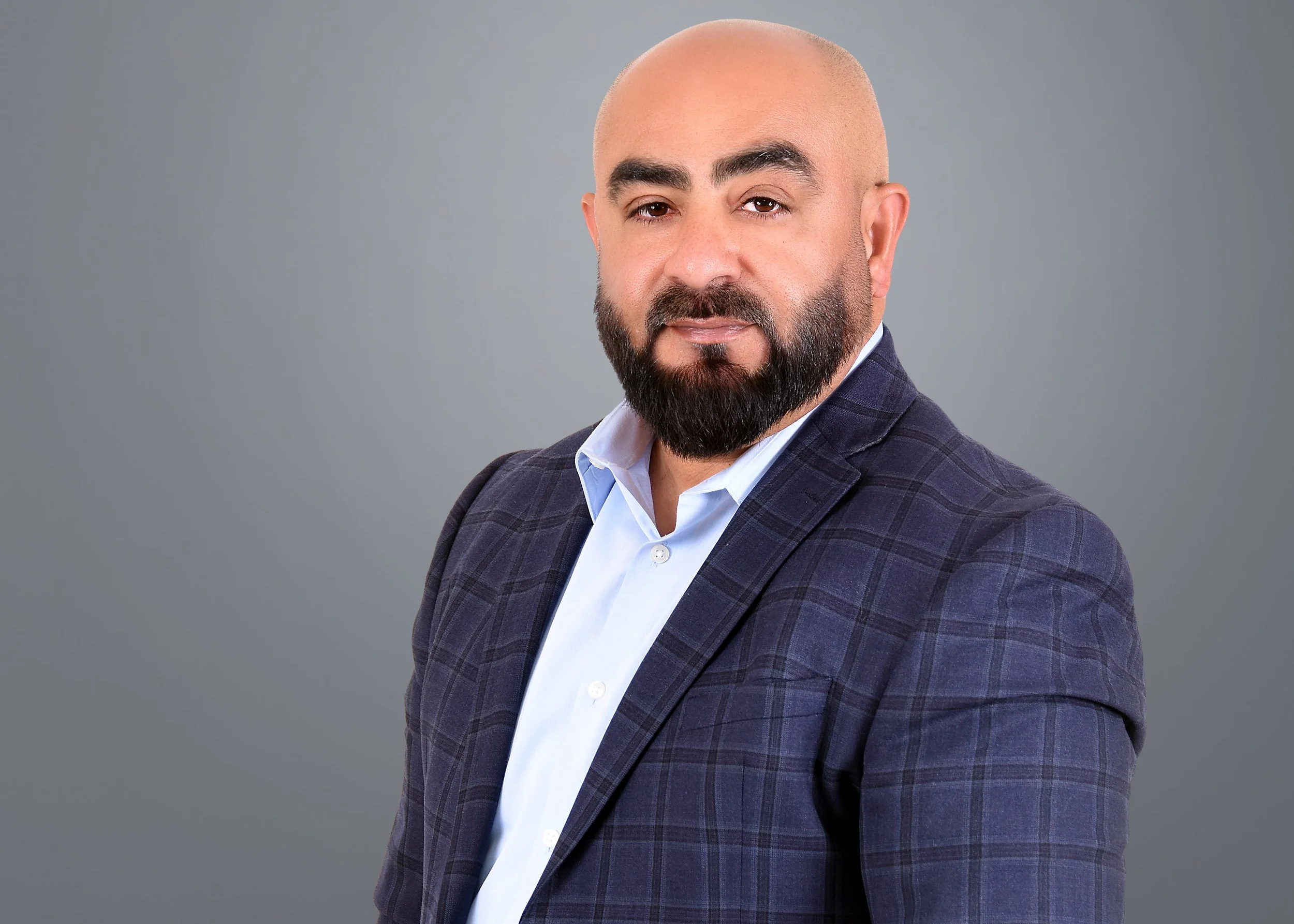
Mutaz Shkoukani
ASC Board of Directors Chair
Mutaz Shkoukani is the Executive Director of Global Systems Engineering, CAE & Regulatory Affairs at Joyson Safety Systems, bringing over 25 years of industry experience in restraint systems and lifesaving products. He leads global initiatives to integrate systems engineering, testing, and virtual development, ensuring the delivery of high-performance safety solutions.
Mutaz's career spans diverse technical and commercial roles across automotive, aviation, and defense industries, providing him with a unique perspective on safety system innovation. His expertise lies in leveraging advanced technologies to enhance occupant protection and regulatory compliance worldwide.
He holds a Master of Science in Biomedical Engineering with a concentration in Transportation-Related Trauma from Wayne State University, and a Bachelor of Science in Mechanical Engineering from Lawrence Technological University."
ASC Board of Directors Vice Chair
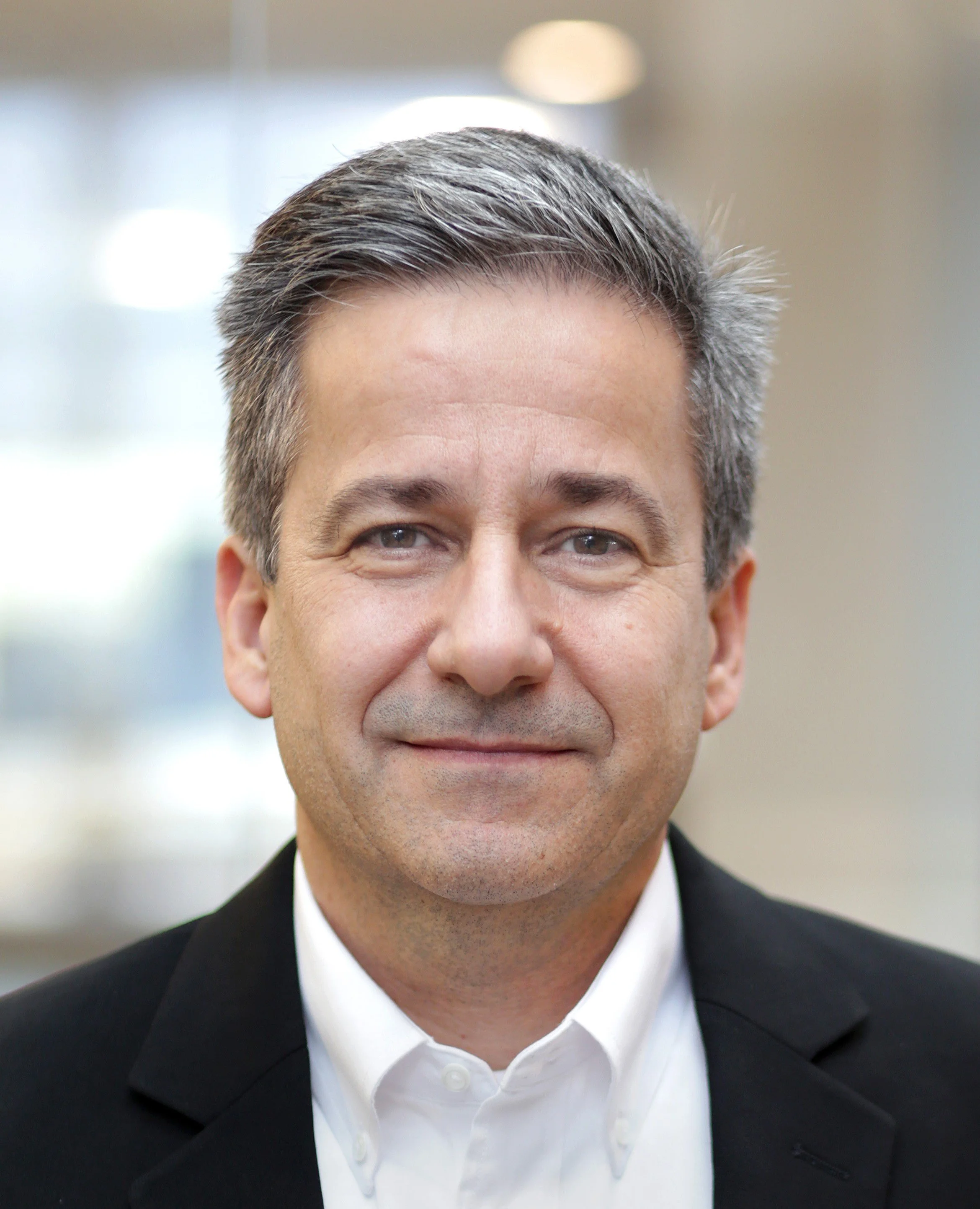
Fabio Niza Maximiuc
Fabio Maximiuc is the Executive Director of Engineering at ZF LIFETEC, where he leads engineering and customer strategy for passive safety systems across the Americas. He brings more than 30 years of automotive safety leadership spanning engineering, key account management, and P&L ownership at Tier-1 suppliers including ZF LIFETEC and Continental Automotive, with prior roles based in Brazil, Slovakia, and the U.S.
His work has centered on translating technical capability into commercial results, from spearheading regional transformation initiatives that build agile, customer-focused engineering teams Fabio holds an MBA in Enterprise Management from FGV in São Paulo, Brazil, and a degree in Mechanical Engineering (Automotive Technology) from FEI, São Paulo, along with executive leadership training from Hult-Ashridge in the UK.