Active Safety
-
![A white SUV on a highway at dusk with digital blue lines indicating sensors and autonomous driving technology.]()
Automatic Emergency Braking
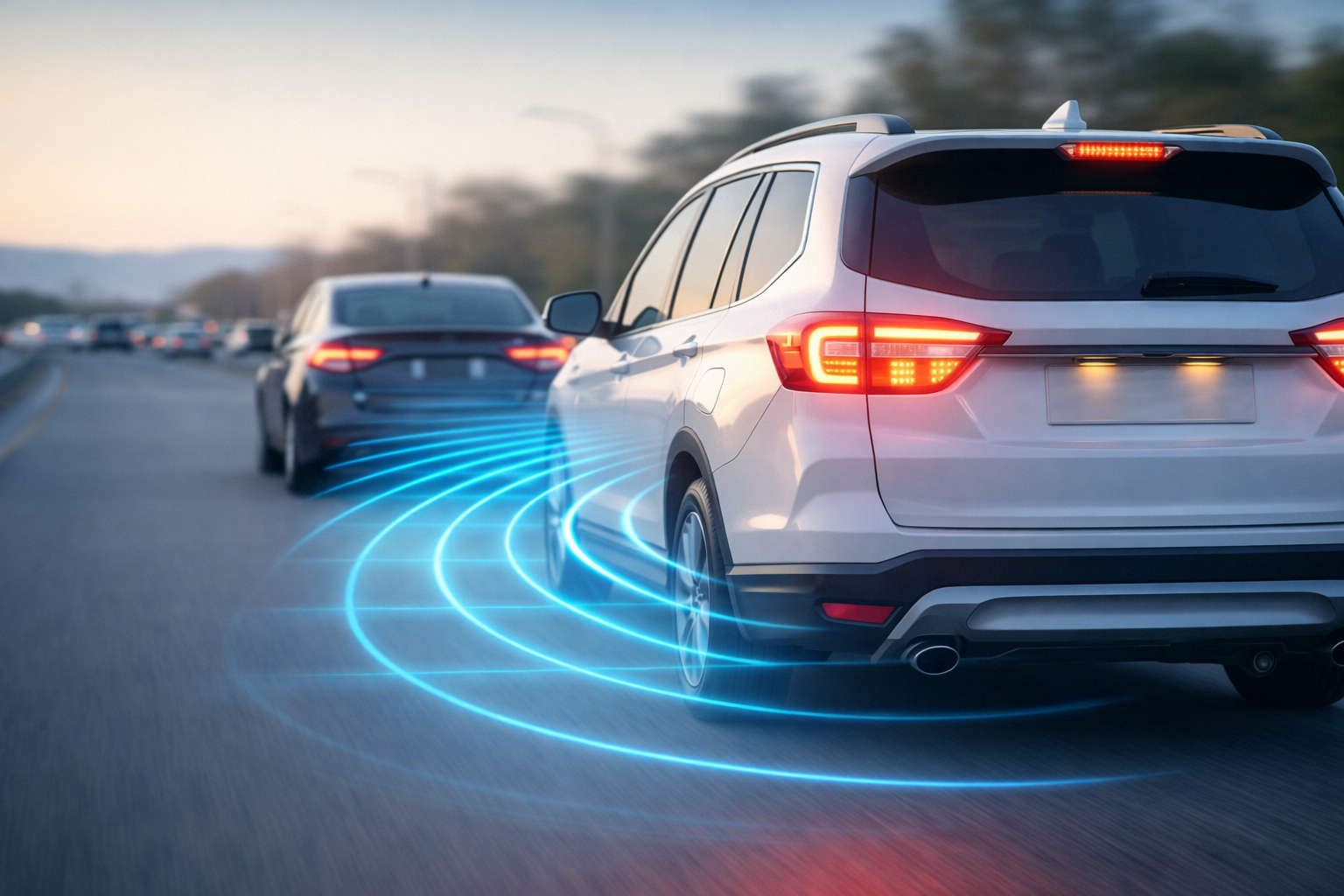
Automatic Emergency Braking (AEB) Combines Driver Assist Systems and Electronic Stability Control to slow the vehicle and potentially mitigate the severity of an impact when a collision is unavoidable. AEB works with or without driver intervention by combining data from forward-looking radar and video systems to provide a complete, accurate and real-time image of the road ahead.
AEB can utilize long-range radar (LRR) or mid-range radar (MRR) in combination with a scalable video camera.
Next, brake pressure is applied automatically, providing maximum brake boost immediately once the driver does engage the brakes.
If a driver's steering and braking intervention is not enough to avoid a collision, autonomous emergency braking with maximum brake pressure will be applied to help mitigate the impact.
-
![Comparison of a white SUV on a wet road during rain, showing with ESC on the left where the car maintains stability with steering assistance, and without ESC on the right where the car skids and loses control.]()
Electronic Stability Control
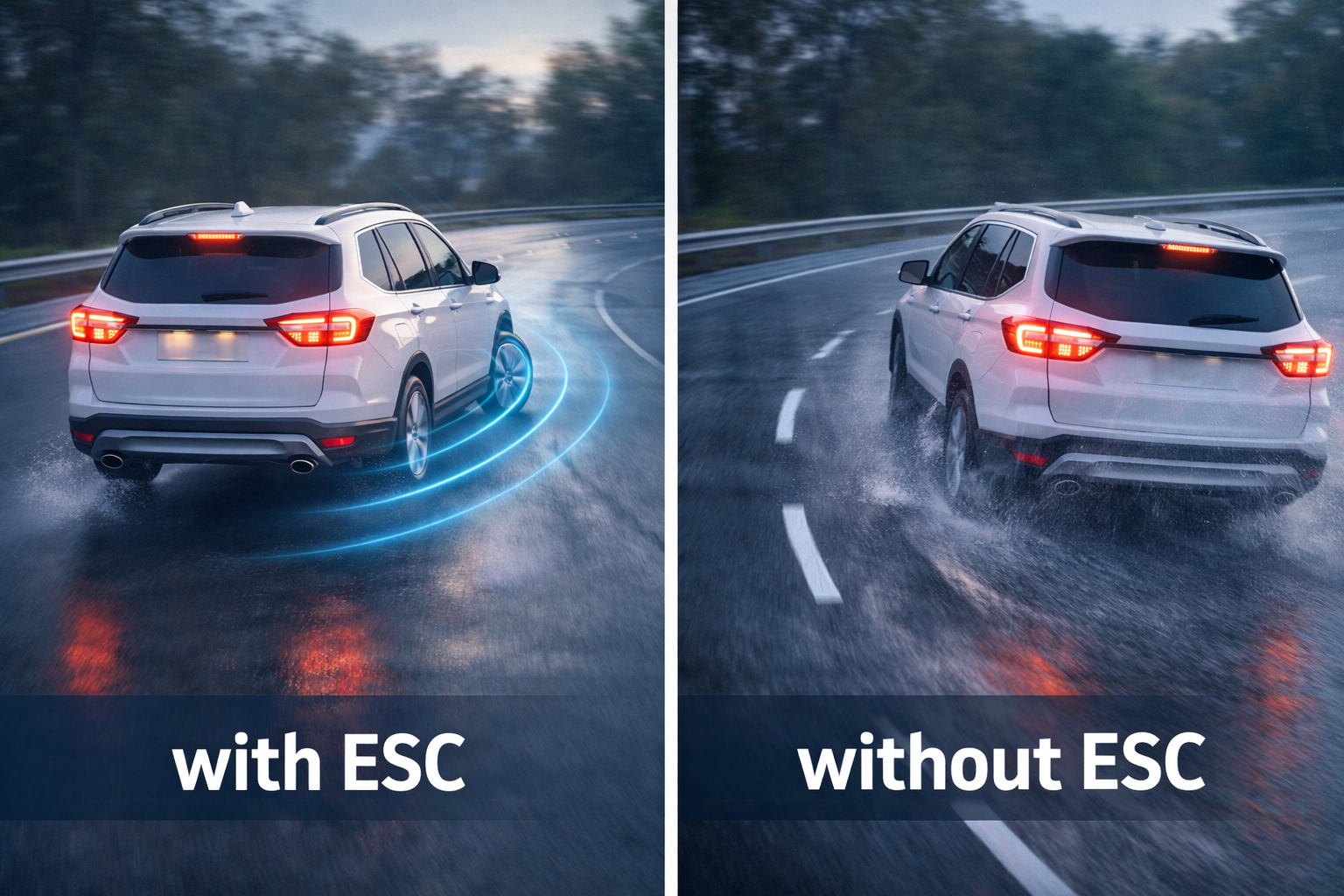
Electronic Stability Control (ESC) is a vehicle safety system designed to help drivers maintain control during sudden maneuvers or when road conditions reduce traction. ESC continuously monitors driver inputs and vehicle behavior by processing data from multiple sensors, including wheel speed, steering angle, yaw rate, and lateral acceleration. These measurements allow the system to compare the driver’s intended direction with the vehicle’s actual movement in near real time.When ESC detects an unstable condition—such as understeer, oversteer, or loss of traction—it responds within milliseconds to help stabilize the vehicle. This is achieved through selective braking of individual wheels and, when necessary, reduction of engine torque to manage speed. By applying corrective forces tailored to the specific situation, ESC helps the vehicle remain aligned with the driver’s intended path across a wide range of driving scenarios and road conditions.
-
![An autonomous or driver-assisted white SUV following a gray sedan on a rural road, with digital blue sensors indicating proximity detection.]()
Crash Avoidance
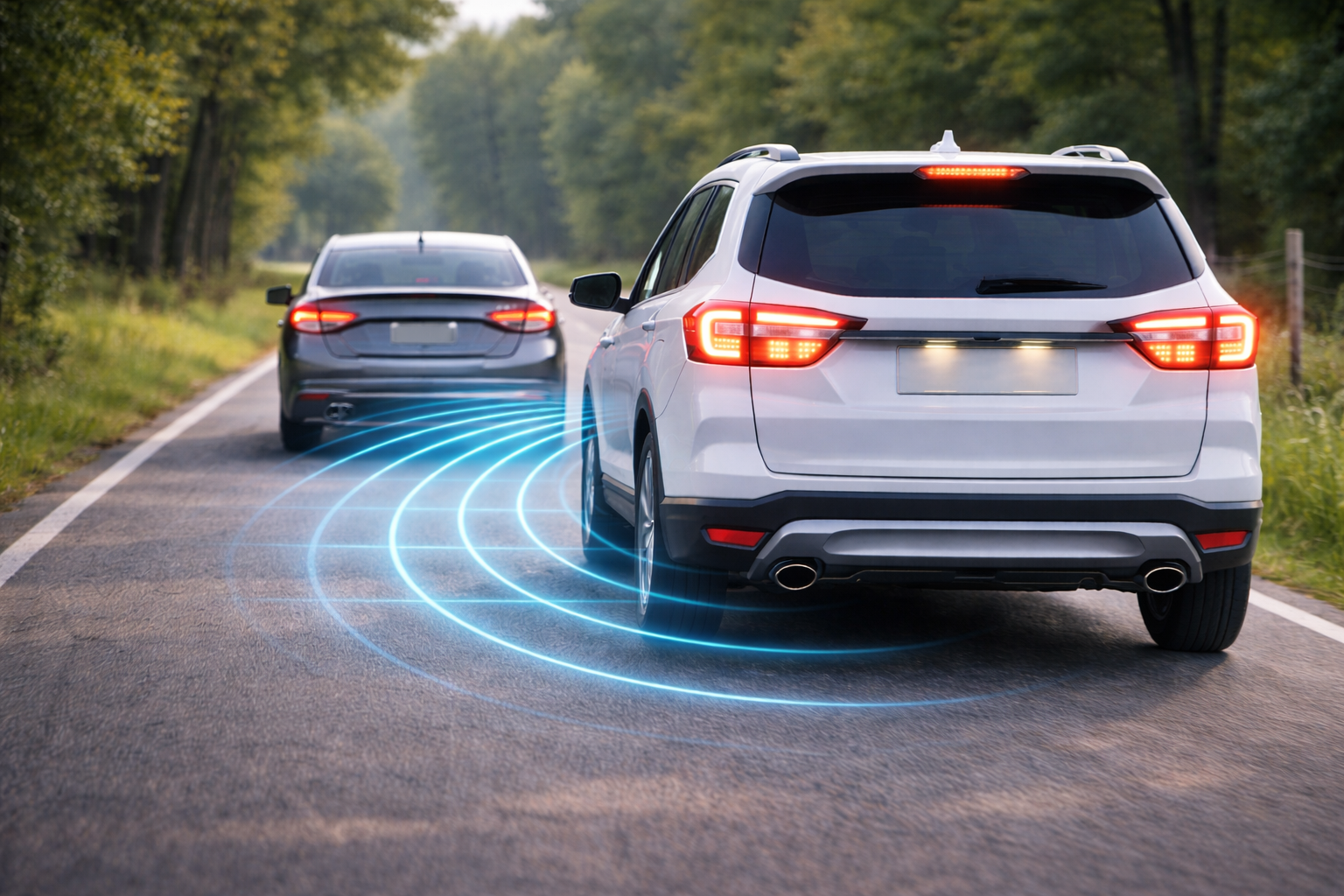
Collision Mitigation Braking (CMB) is a driver assistance technology designed to help reduce the severity of a collision—or potentially avoid one—primarily in urban and low-speed driving environments. Using radar sensors, CMB monitors the distance and relative speed of vehicles or objects ahead, identifying situations where a collision risk may be developing.When a potential collision is detected, the system alerts the driver through audible, visual, or haptic warnings and can provide brake assist to support driver response. If a collision becomes imminent and driver input is insufficient, CMB can automatically apply braking to reduce vehicle speed and help mitigate impact forces. By integrating radar sensing with electronic stability control, CMB enhances vehicle safety during close-range, low-speed driving scenarios.
-
![The image shows the interior view of a car with a focus on the dashboard and the rearview mirror, while driving on an open road surrounded by trees. The car appears to have autonomous or assisted driving technology, indicated by blue lane markings projected onto the road and a display screen showing a car and lane guidance visual.]()
Lane Keeping Assist
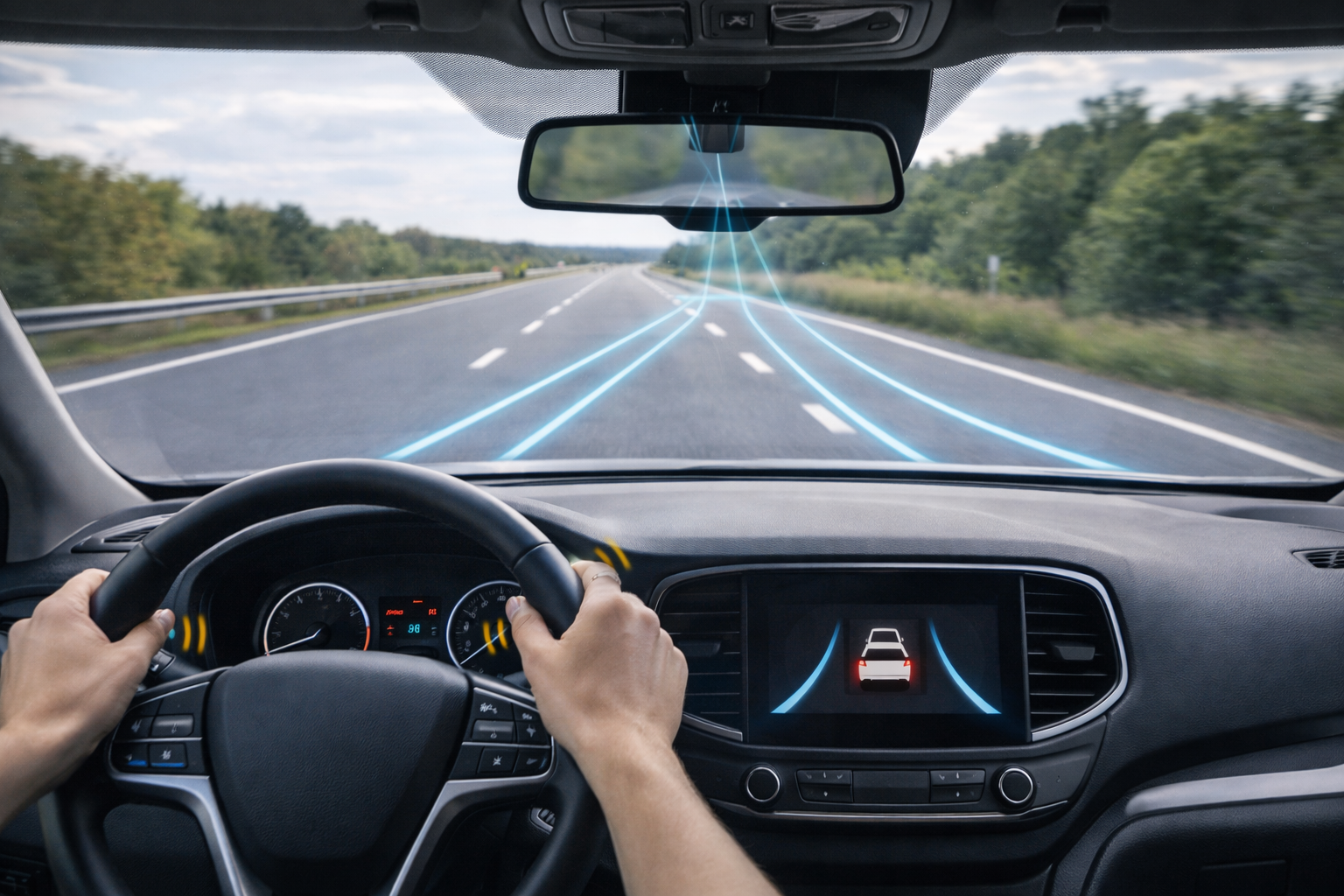
Lane Keeping Assist (LKA) is part of a broader group of lateral support technologies that help drivers maintain proper lane position, including Lane Departure Warning and Lane Guidance systems. These systems use a forward-facing camera, typically mounted near the rearview mirror, to detect lane markings and monitor the vehicle’s position within the lane across a wide range of road conditions.When the system determines that a vehicle may be drifting out of its lane unintentionally, LKA can alert the driver through steering wheel feedback and provide gentle corrective steering torque via the electric power steering system. These interventions are designed to support the driver—not replace them—and are suppressed when turn signals indicate an intentional lane change. By operating continuously in the background, LKA helps improve lane discipline and reduce the risk of unintended lane departures.
-
![Nighttime scene from inside a car with autonomous driving technology detecting a pedestrian walking on the roadside, highlighted with a yellow box.]()
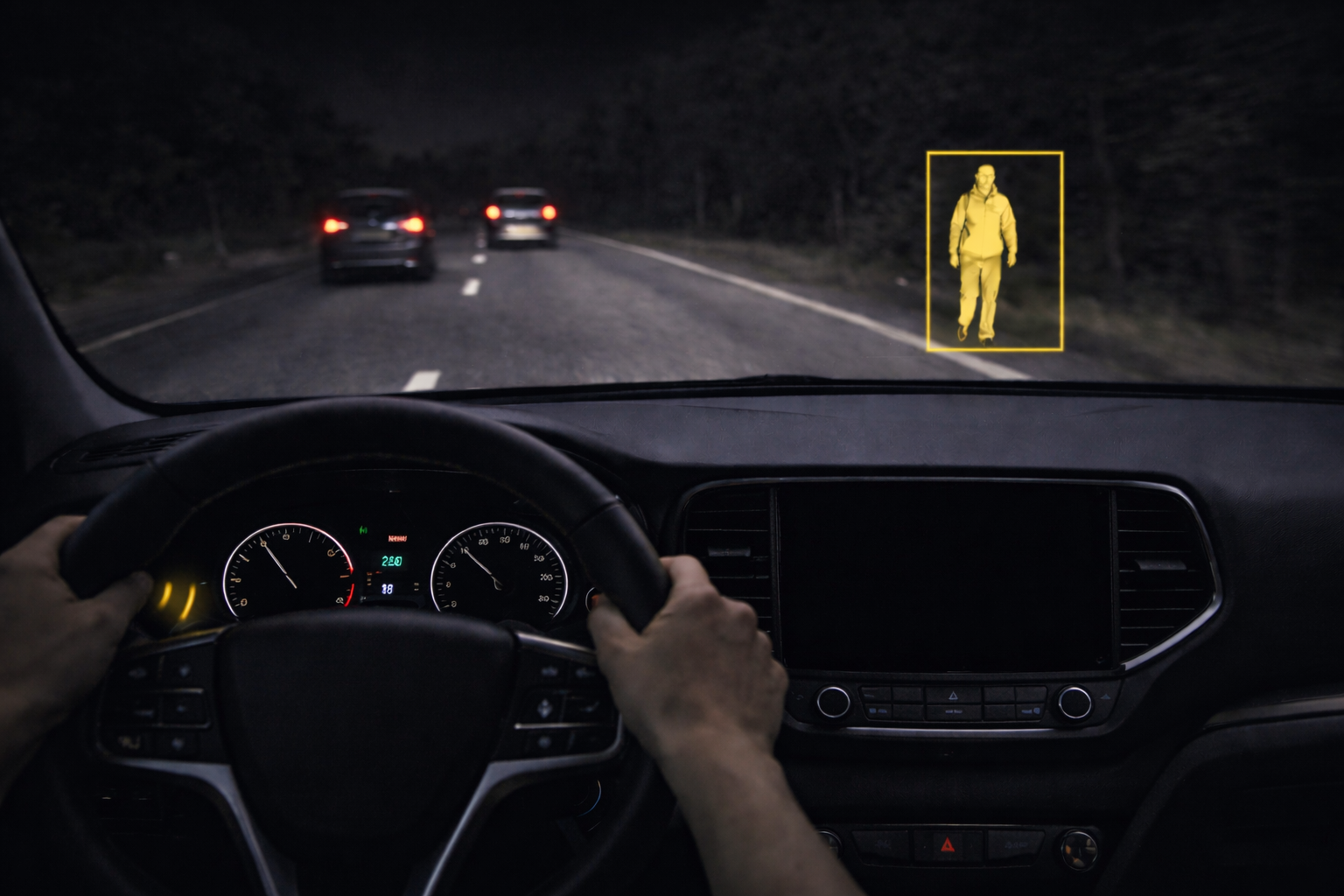
Night Vision
This technology allows the driver to be alerted to objects that may not be seen by the human eye through the use of infared and other technologies. The Night Vision shows the driver the location of the object so corrective action can be taken to avoid a collotion. Objects identified can include people, animals or other objects on the roadway. -
![Aerial view of a parking lot with six cars, with one car backing up using a radar sensor.]()
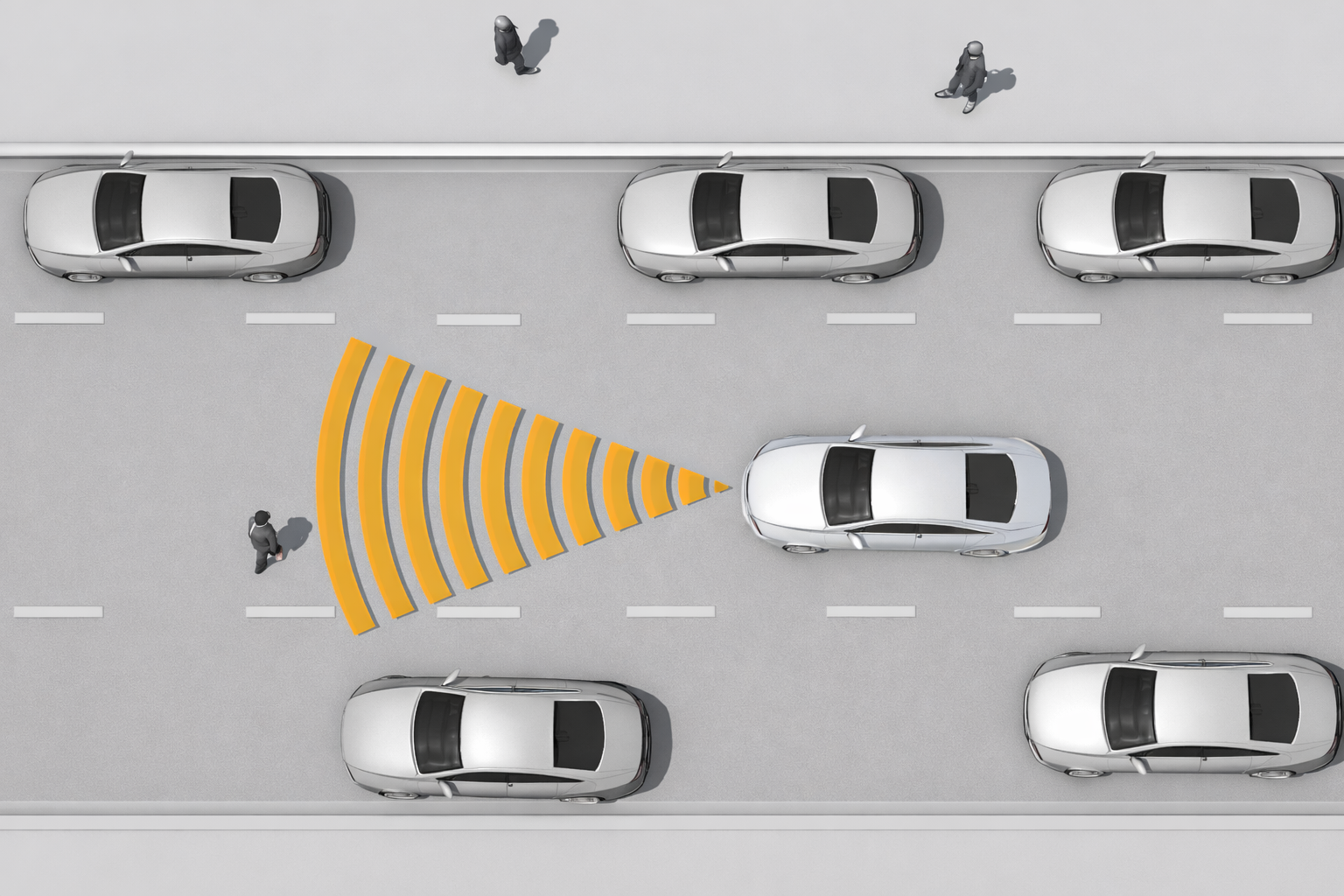
Pedestrian Protect
"Pedestrian Protect" radar or camera identifies the pedestrian and alerts the driver for potential accident avoidance
f an accident does occurs, the one type of pedestrian protection is the automatic hood lifter. I deploys upon sensing and raises the vehicle's hood allowing the hood to absorb some of the energ which reduces potential for head injury.
-
![A car in the middle of a lane on a multi-lane road, with blue sensor waves indicating active car sensors, surrounded by other parked cars and trees on both sides.]()
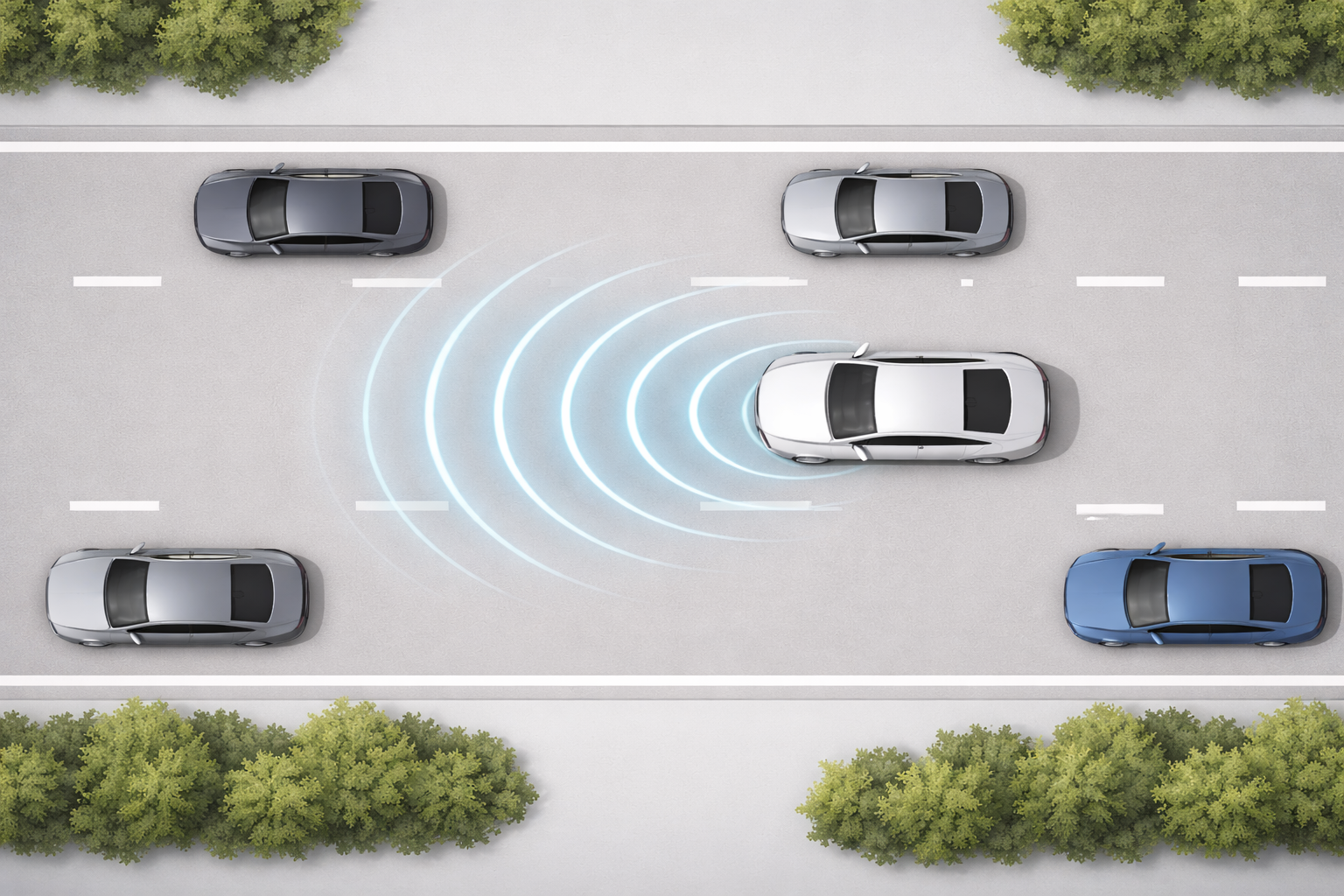
Adaptive Cruise Control
Adaptive Cruise Control (ACC) uses electronically scanning radar to help drivers maintain a consistent speed and a driver-selected following distance from the vehicle ahead. By continuously monitoring traffic conditions, ACC can automatically adjust throttle and apply limited braking to manage headway, supporting smoother driving across a wide range of traffic scenarios.When equipped with Stop & Go functionality, ACC expands its usefulness in congested and stop-and-go traffic by managing vehicle speed down to a complete stop and resuming when prompted by the driver. Integrated features such as Forward Collision Warning, brake support, and headway alerts provide additional awareness and assistance by warning drivers of slower or stopped traffic ahead and supporting braking response when necessary. Together, these capabilities help reduce driver workload, improve comfort, and support safer driving in everyday conditions and varied environments.