Electronic Sensors
-
![Top-down view of a silver car on a road with a red and yellow shaded area indicating the car's blind spot detection system, with greenery on both sides of the road.]()
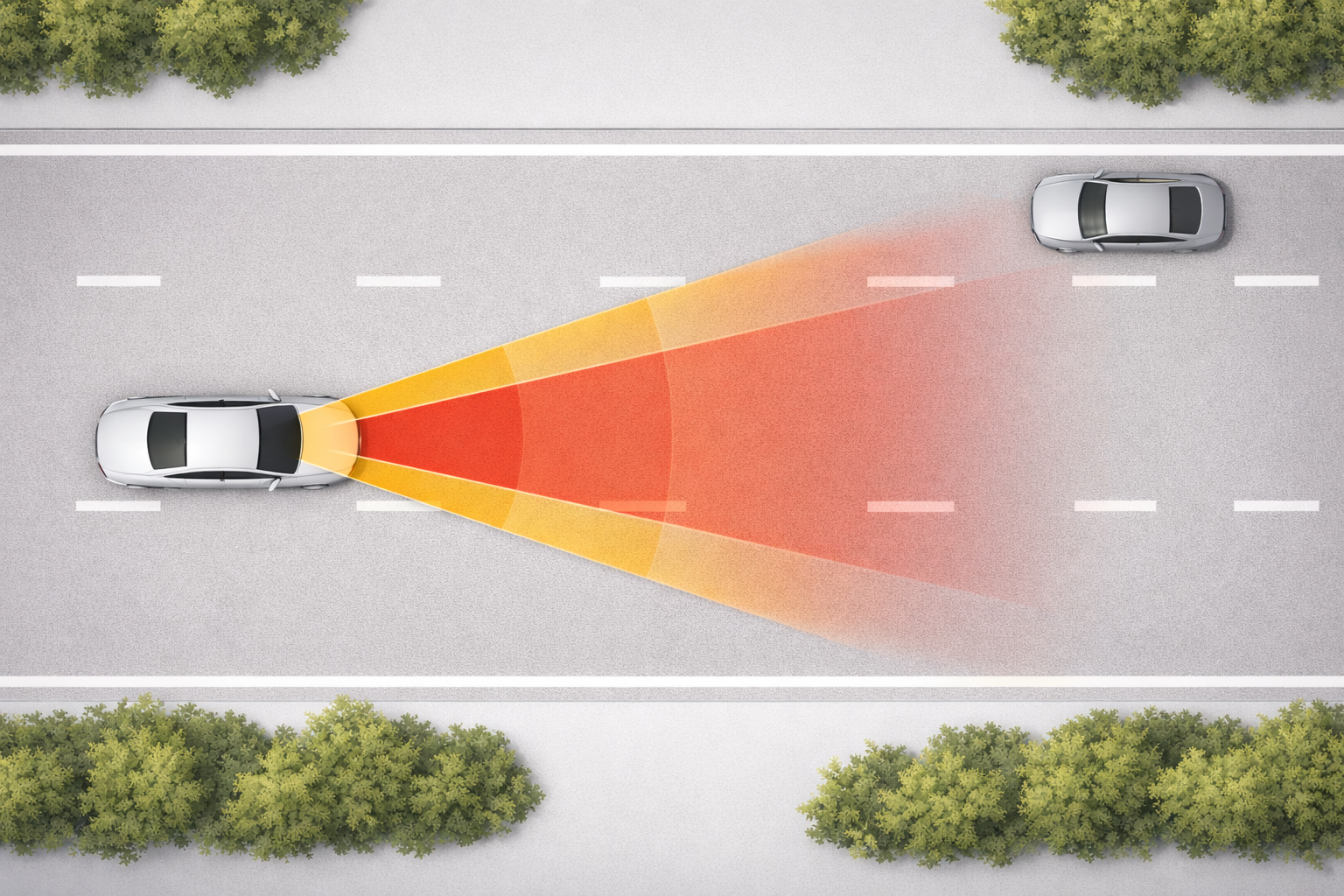
Active Safety Sensors
Radar-based sensing systems operate by scanning the area in front of the vehicle using long-range or short-range frequencies to detect objects ahead. Data from the radar unit is processed by an electronic control unit (ECU) to determine closing distance, relative speed, and time to potential impact.Based on this analysis, the vehicle can initiate a range of preprogrammed responses to support the driver. These actions may include alerting the driver to a potential hazard, preparing the braking system for faster response, or automatically applying braking when necessary. By continuously monitoring forward conditions, radar systems support timely intervention and enhanced safety across a variety of driving scenarios.
-
![Overhead view of a white autonomous vehicle with sensors and electronic components, on a road with lane markings and greenery on both sides.]()
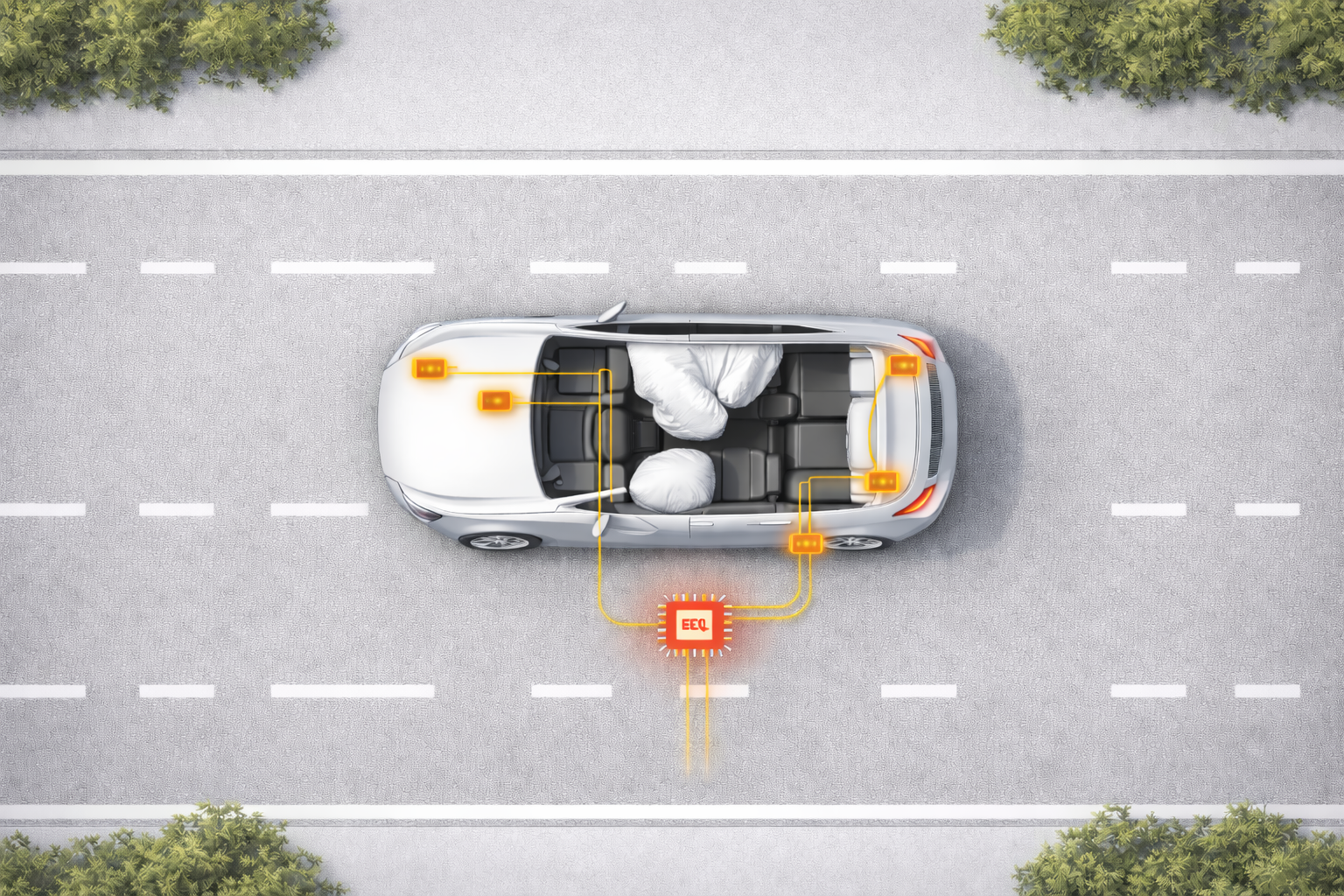
Passive Safety Sensors
Passive safety sensors play a critical role in determining when restraint systems such as seat belt pretensioners and airbags should deploy during a crash. In frontal collisions, accelerometers measure rapid changes in vehicle deceleration and send this data to an electronic control unit (ECU), where software evaluates whether the severity of the event meets deployment thresholds. This decision-making process occurs extremely quickly—often within milliseconds—making it one of the most time-critical functions in vehicle safety systems.Side impact sensors operate using similar principles but are distributed throughout the vehicle to accurately detect impacts along the vehicle’s length. These remote or satellite sensors send data to the main ECU, which calculates whether side airbags or other protective measures should deploy. Rollover sensing differs due to the longer duration of the event, using accelerometers to monitor roll rate and yaw angle over time. When a rollover is detected, curtain airbags are deployed to help protect occupants from ground contact and reduce the risk of ejection throughout the event.