Passive Safety
-
![Two orange humanoid robots with black and yellow test markers on their heads, sitting in the front seats of a car, secured with seat belts.]()
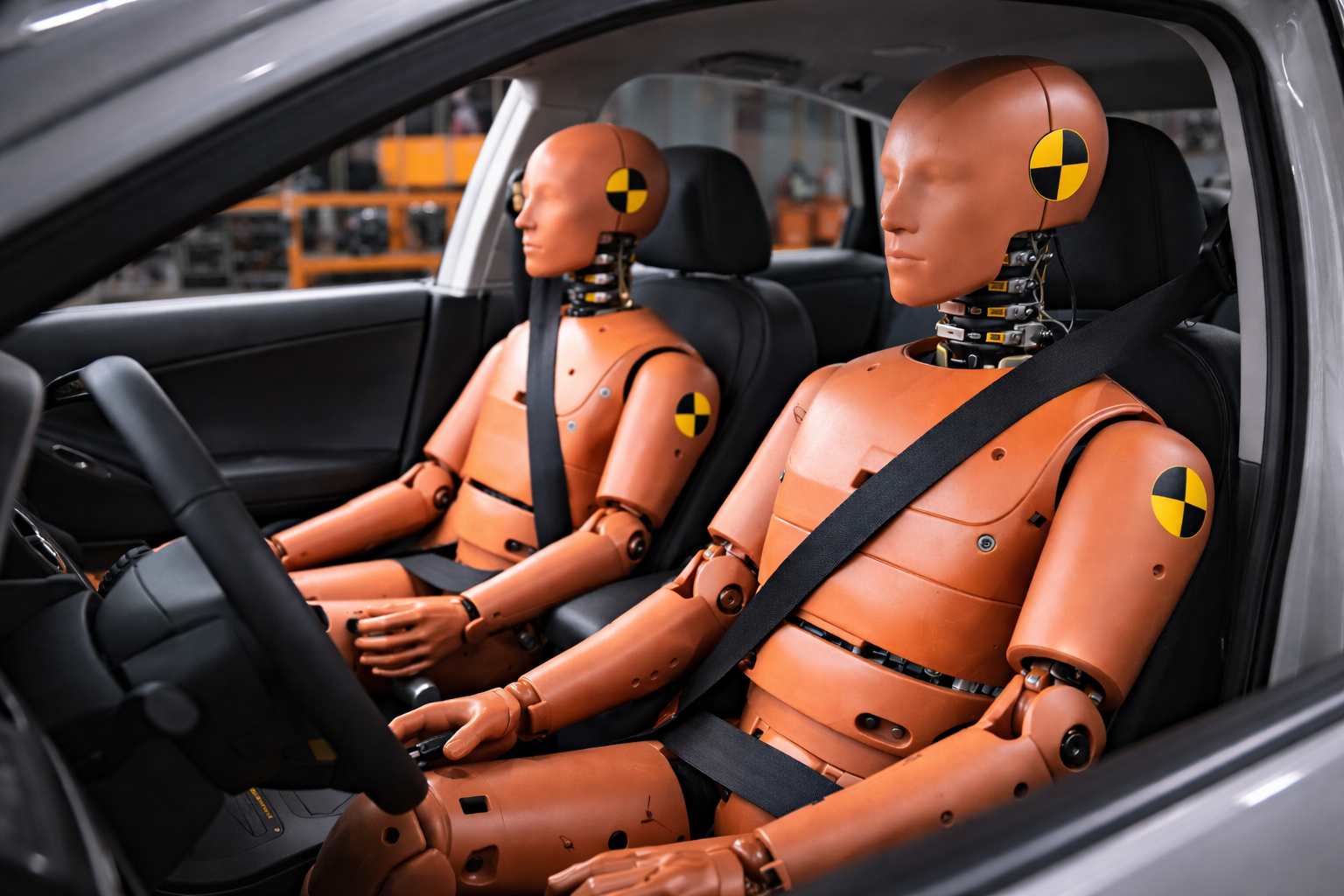
Crash Dummies
The key to passive safety besides the products is the test dummy that confirms the safety value of a given technology in standard and regulatory tests. Dummies come in all sorts of shapes and sizes and are sometimes specialized to capture a specific crash or injury type like side impact. Crash dummies use sophisticated measuring devices along with simulated skeletal, muscle and skin properties to simulate the damage a human would sustain in a crash. While extremely technical, they still can only simulate certain body conditions and are continually being researched and improved to allow even more accurate predictions of injury in more situations.
-
![Car interior with multiple deployed airbags, including front airbags for driver and passenger, side airbags, and window airbags.]()
Airbags
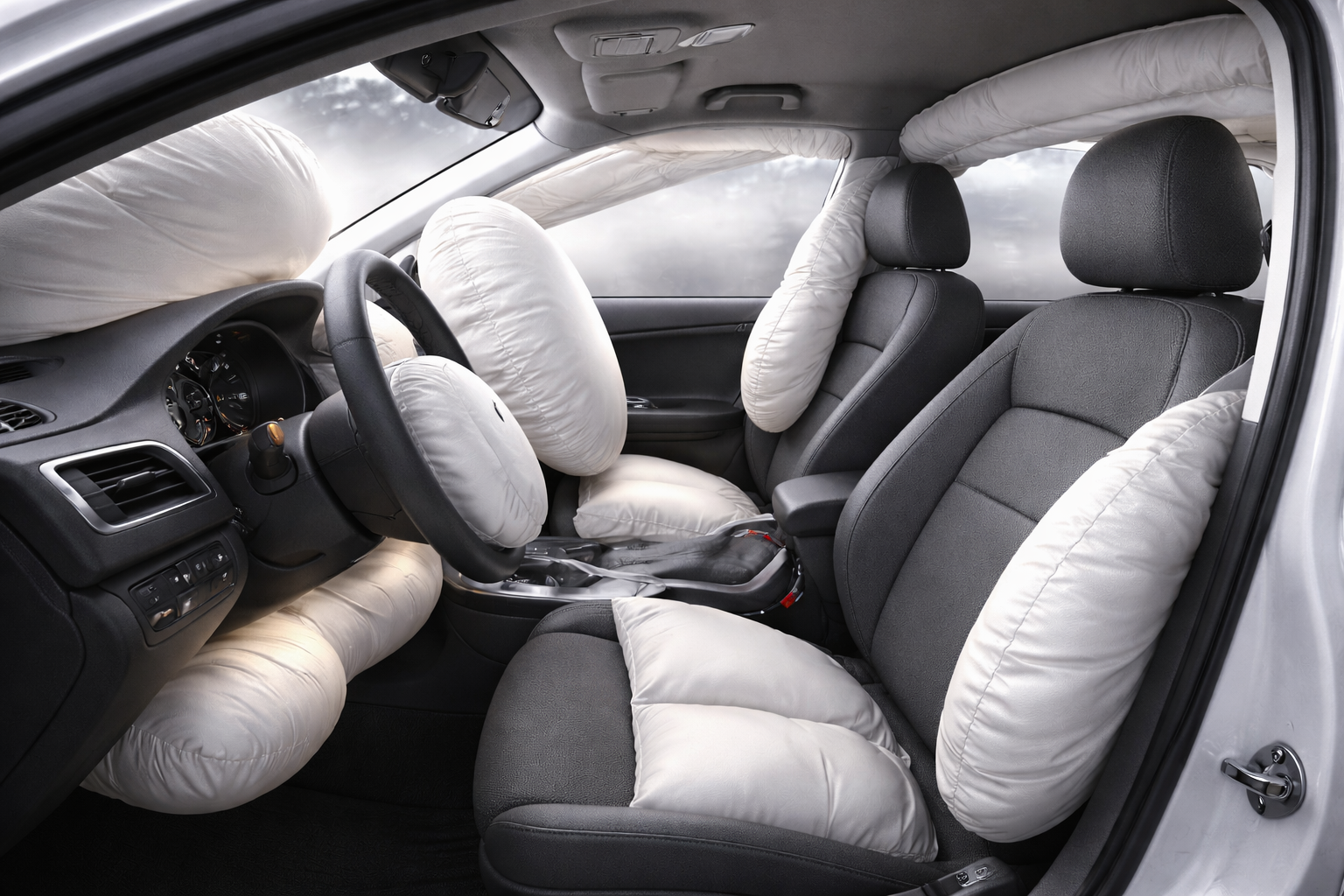
Airbags play a critical role in modern vehicle safety by helping manage occupant motion and reducing injury during a wide range of crash scenarios. Advanced airbag module designs combine effective restraint performance with compact packaging, adaptable inflator technology, and lightweight materials to meet global safety requirements. These systems use controlled gas output and carefully folded airbag shapes to support gentle, well-timed deployment, helping protect both properly seated occupants and those who may be out of position at the time of deployment. Lightweight housings and refined designs also contribute to reduced vehicle mass while maintaining robust performance during a crash event.
In addition to frontal protection, airbag systems address complex crash modes such as rollovers and lower-body impacts. Rollover airbags are designed to deploy based on vehicle roll dynamics and remain inflated for extended durations—up to several seconds—to help provide head protection and reduce the risk of occupant ejection throughout the entire event. Knee airbags further support occupant safety by managing lower-body movement, helping align occupant kinematics and reducing loads to the chest and legs during a crash. Together, these airbag technologies work as part of an integrated restraint system to improve protection across a wide range of real-world driving scenarios.
-
![The image shows the interior of a vehicle from the back seat. The headrest of the front passenger seat is in view, with a metallic support pole and black fabric covering. Part of the dashboard, windshield, and road outside are visible in the background.]()
Seatbelts
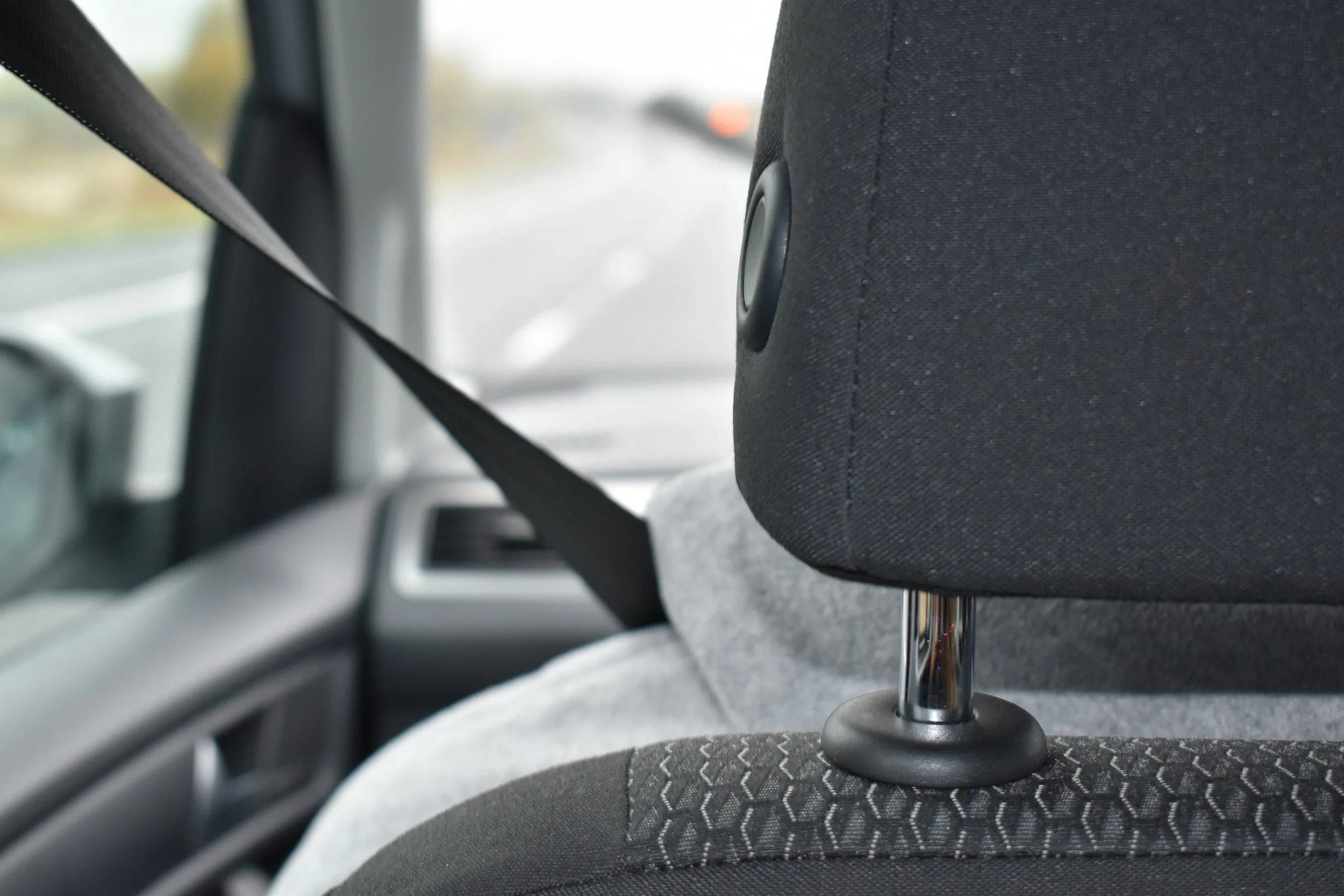
Seatbelts remain one of the most effective and widely used vehicle safety systems, forming the foundation of occupant restraint in a crash. Standard three-point seatbelt systems combine a shoulder and lap belt with a buckle, retractor, and anchor to secure occupants and manage crash forces. Advanced features such as pretensioners, load limiters, crash sensing, occupant sensing, and height adjustment help tailor restraint performance to different occupants and crash conditions. Together, these components work to control occupant movement, reduce injury risk, and coordinate with other restraint systems during an impact.
Modern seatbelt technologies increasingly integrate active and passive safety systems to improve protection before a crash occurs. Active seatbelt systems use motors and vehicle sensor data—such as braking, stability control, and environmental sensing—to remove slack and position occupants more securely in their seats during critical driving situations. Features like active buckle lifters improve belt accessibility and usability, while reversible pretensioning helps prepare occupants for a potential crash without permanent deployment if the event is avoided. By improving occupant positioning in advance, these systems enhance the effectiveness of airbags and other restraints, contributing to a more comprehensive and responsive vehicle safety approach.
-
![Close-up of the front part of a gray modern car parked on pavement, showing the headlight, front bumper, tire, and alloy wheel with Ford logo.]()
Tire Pressure Monitoring
The basic TPM system alerts drivers when tires are underinflated through a warning light on the instrument panel. The enhanced TPMS system locates the underinflated tire(s) and displays individual warnings.
Direct TPMS solutions comply with Federal regulations in the US and European customer requirements. Keys to the system are a battery-powered Remote Frequency sensor that is deployed in each wheel, and a receiver that retrieves tire data from each of the four sensors. Direct TPMS, unlike indirect TPMS, measures true tire pressure, so there are no error factors or inaccuracies due to calculating other indirect pressure measurements, such as wheel rotational speed.
-
![View from the driver’s seat of a vehicle, focusing on the steering wheel with a person's hand on it. The dashboard and windshield are visible, with a cloudy sky and some blurry outdoor scenery in the background.]()
Steering Wheels
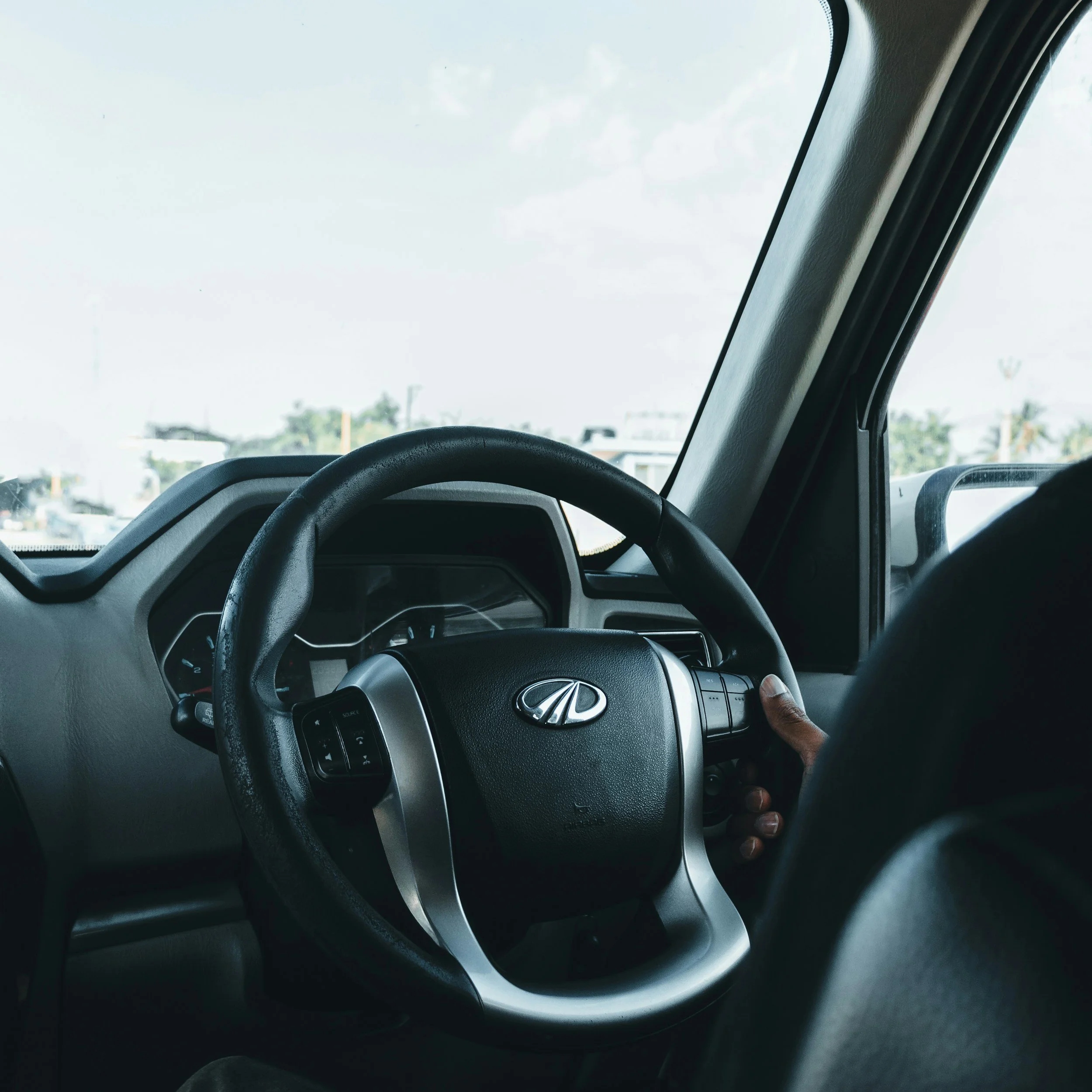
Modern steering wheel systems integrate the driver airbag module into a modular, standardized base design that balances functional requirements with flexibility in styling and configuration. This modular approach allows common core components to be used across platforms while enabling customization to meet vehicle design preferences, including variations in materials, finishes, and integrated controls. Adjustable airbag size, materials, and deployment characteristics ensure the system can be tailored to available packaging space and overall restraint system requirements.
The modular design also supports a range of inflator options, including single- or dual-stage inflators, with configurations designed to maintain consistent module sizing across markets. Standardized mounting and fastening methods support efficient integration while accommodating vibration management and performance needs. Additional features such as multifunction switches, paddle shifters, and horn controls can be incorporated as required, allowing steering wheel systems to support both safety performance and driver interface functionality within a unified design.
-
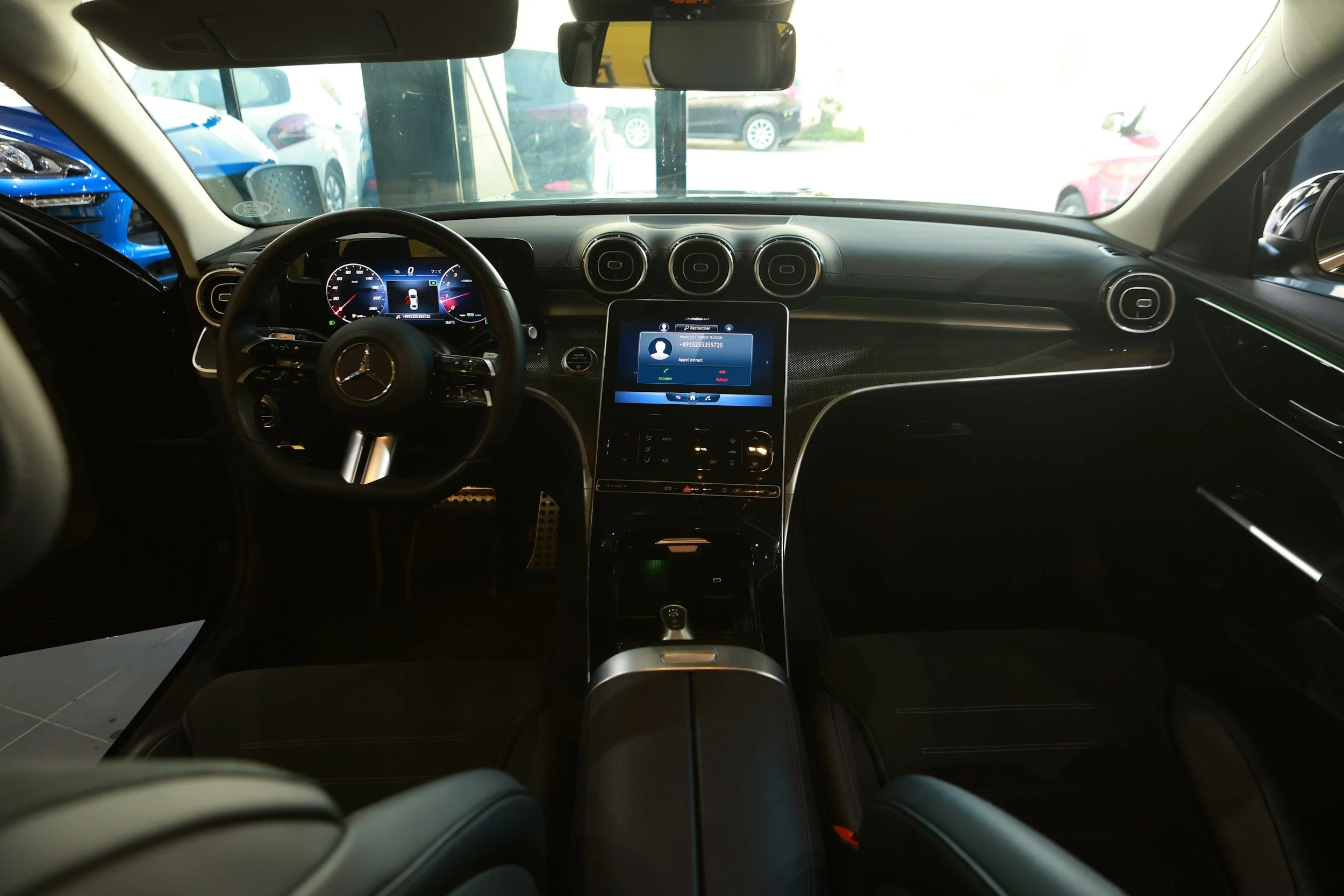
![Interior of a modern luxury car, featuring a black steering wheel with a Mercedes-Benz logo, digital dashboard, central touchscreen display, and three round air vents on the dashboard.]()
Interiors
Interiors are an often over looked, but very important part of the safety system of a vehicle. The interior provided padded surfaces to reduce impact energy and are the structural members that support the airbags and seat belts. Interiors are comprised of instrument panels, steering wheels, head liners, door rests, window glazing, seats, trim parts and door locks to just name a few. There are federal safety standards for head impact on designated surfaces, door lock performance during an accident, flammability standards on all parts, window strength and shape/shatter resistance of the glass, steering wheel rim bending loads, seat anchorage strength as well seat track performance.
The shape of these parts all contribute to the entire safety system. The ramp of the seat as well as the friction of the fabric influence occupant safety. There are too many design standards to list or discuss on interior components, but be assured, they are engineered with safety performance as a part of the entire system.
-
![Young child with blue eyes sitting in a car seat, holding a green plush toy and sucking on a pacifier.]()
Child Safety
Child safety is a critical consideration in vehicle design, encompassing both integrated safety systems and how vehicle interiors interact with child restraint systems. Children under the age of 13 should always be seated in the rear seat, where they are better protected in the event of a crash. Child safety seats, booster seats, and seat belts must be selected and used according to manufacturer recommendations to ensure proper fit and effective protection based on a child’s age, height, and weight.
Proper positioning is essential for seat belts to function as intended. When incorrectly positioned, seat belts can expose children to injury-causing forces during a crash, particularly if the belt does not align correctly across the pelvis and chest. Front seating positions increase risk due to potential airbag deployment forces, especially for rear-facing child seats or children who may be seated out of position. When children are properly restrained in the rear seat and positioned correctly, vehicle safety systems are better able to provide their intended level of protection.